
When I first started experimenting with worm composting on my apartment balcony, I wondered if a vertical system could really keep worms happy long-term. Like most people, I pictured composting as something that needed a big outdoor bin and plenty of space.
After testing different layouts and feeding routines, I quickly understood why worm towers have become one of the most popular vermicomposting systems around the world — especially for people living in apartments, townhouses, or homes with limited outdoor space.
What is a worm tower?
A worm tower is a vertical composting system made up of stacked trays (or tiers) where composting worms process food scraps into nutrient-rich worm castings.
Instead of one large container, the system grows upward. Fresh food and bedding are added to the top tray, and as the worms finish processing material below, they naturally migrate upward toward the food source. The lower trays are then left behind full of finished castings that can be harvested for plants.
In this post, I’ll walk through the five key features of a worm tower and explain why they make worm composting easier, cleaner, and more consistent compared to many traditional systems.
1. A small footprint that fits anywhere
One of the biggest advantages of a worm tower is how little floor space it uses.
Because the system grows vertically instead of horizontally, you can place it in:
- A balcony
- A small courtyard
- A garage
- Indoors (depending on the design)
What I noticed almost immediately was how much more consistent I became with feeding and maintenance. When your compost system is right there in your daily living space, you naturally check moisture levels more often, spot issues early, and keep things running smoothly. Large outdoor compost bins are easy to forget about.
2. Expandable as the population grows
Worm towers are built to scale with your system.
When you first start, you usually work with just one tray. As your worms multiply and castings build up, you simply add another tray on top. This instantly gives the worms more space, more bedding, and more food. This expandable design offers a few benefits such as – you’re not forced to buy a massive system upfront and worm populations and castings can grow slowly as you get used to the process.
3. The Sump
At the very bottom of most worm towers is a section called the sump.
Its main role is to collect excess liquid (often called leachate) that filters down from the trays above. Some systems use a tap, while others have drainage holes that allow liquid to exit into a container below.
But the sump does more than just catch moisture.
Because it’s typically empty, it also creates:
- Airflow through the lower part of the system
- Reduced risk of waterlogging
- Better oxygen levels for the worms
From experience, good moisture management is one of the biggest factors in successful vermicomposting. The sump acts like a buffer zone that keeps conditions stable and forgiving — especially for beginners.
4. Portable and Easy to Disassemble
Another underrated benefit of worm towers is how manageable they are physically.
Instead of lifting a heavy compost bin filled with wet material, you can lift one tray at a time. This makes:
- Harvesting castings easier
- Cleaning simpler
- Troubleshooting faster
If something seems off — too wet, too dry, too compacted — you can open the system tray by tray and see exactly what’s happening.
This visibility is huge when you’re learning or fine-tuning your setup.
5. Suitable for Indoor and Outdoor Use
Many compost systems only work well outdoors. Worm towers, on the other hand, can function well both inside and outside depending on climate and design.
This flexibility is especially important in places with:
- Very hot summers
- Cold winters
- Limited outdoor space
During extreme weather, worm composting can continue indoors without pests or odours when managed properly. When conditions improve, the system can be moved back outside or onto a balcony.
It makes year-round composting realistic — even in apartments.
Watch the Full Animated Breakdown
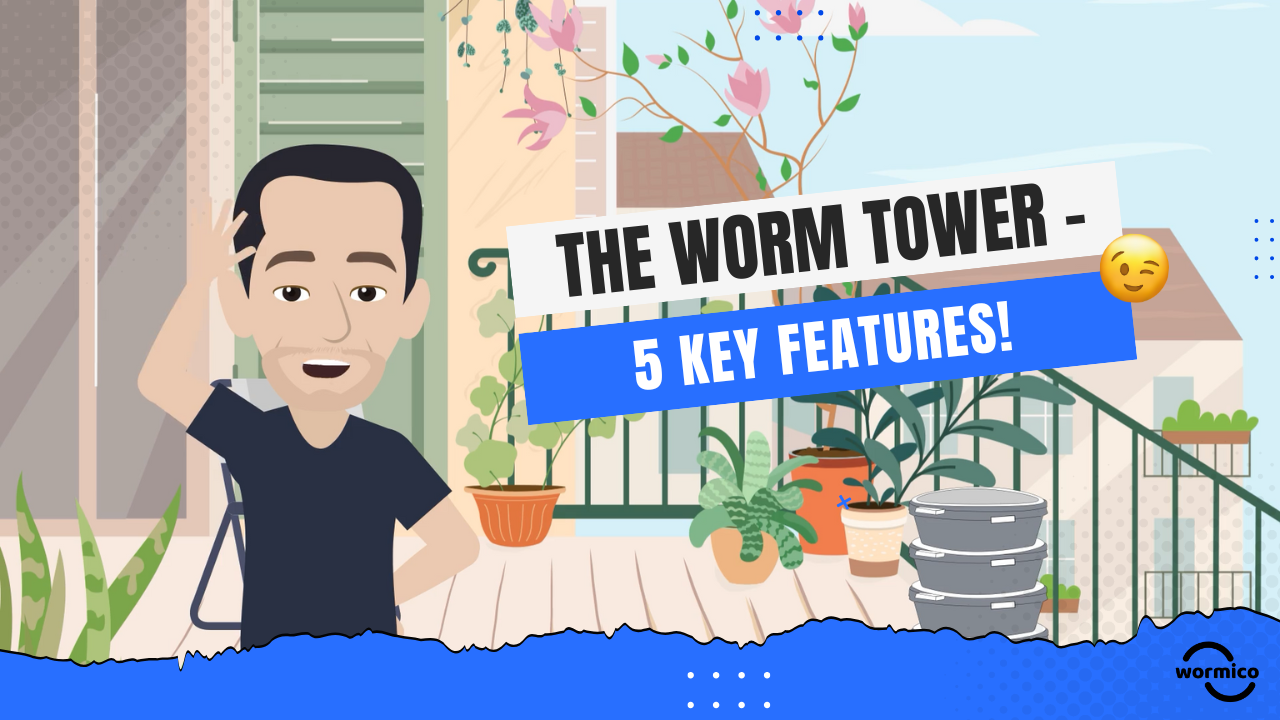
I’ve put together a short animated video that visually walks through all five features of a worm tower — showing how each part works and why the system flows so well.
If you’re new to worm composting or considering a vertical system, it’s a great place to start.
👉 Watch the full video of the 5 Key Features of the Worm Tower
Final thoughts
Worm towers aren’t just compact compost bins — they’re living vertical ecosystems designed to work with worm behaviour instead of against it.
For small homes, balconies, and indoor composting, they offer one of the simplest and most efficient ways to turn food scraps into powerful plant nutrition.
If you’re curious about building a consistent, low-mess compost system, a worm tower is an excellent place to start.