
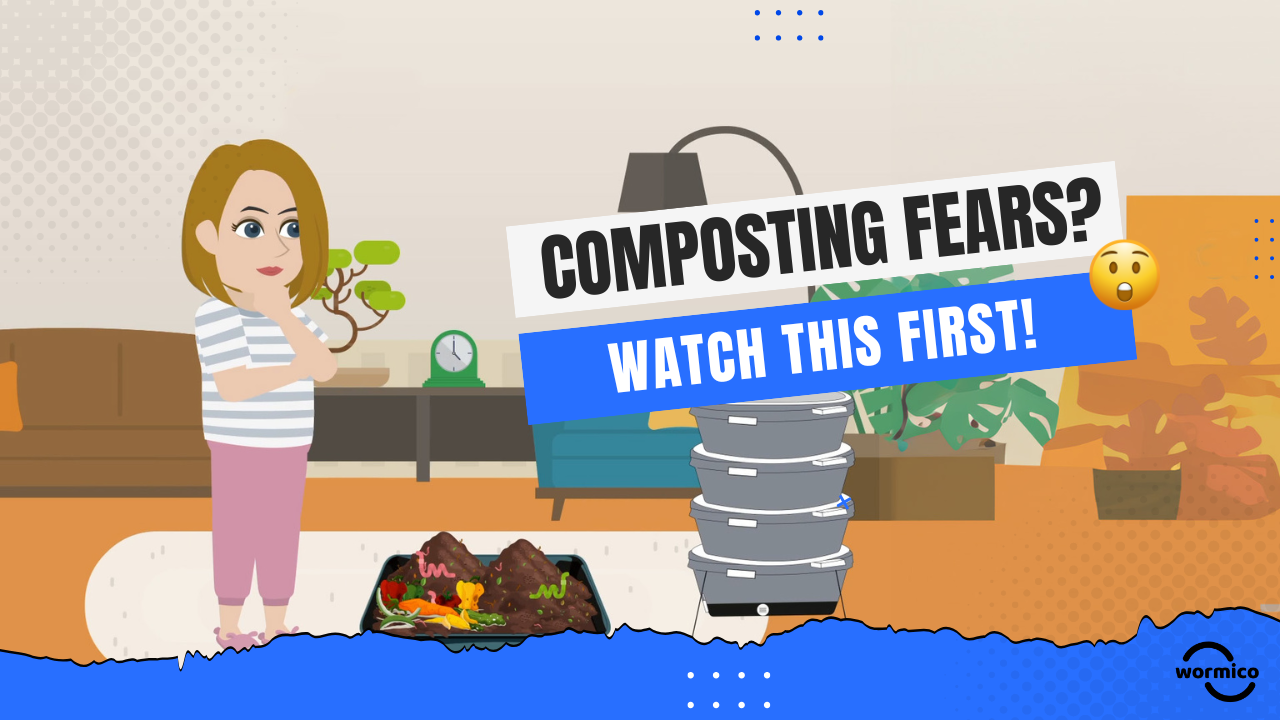
When I first started worm composting in my home, to be honest I didn’t know what to expect. But I did have some concerns that most people do when first starting a project that involves live animals, food and nature right in their home. In addition, I live in an apartment so I don’t have a backyard and that doesn’t leave much room for error!
Fast forward to now – running multiple worm towers indoors and outdoors, feeding routines, controlling bugs and keeping things ticking along I came to realise something important: almost every fear people have about vermicomposting comes from systems being mismanaged — not from the worms themselves. Once I dialled in the right conditions and got a handle on things, worm composting became easier and strangely quite satisfying.
Anyhow, let’s discuss some worm composting fears and what it really means in reality.
Fear #1: Won’t my worm bin smell?
This is probably the biggest reason that people hesitate when considering indoor composting. A healthy worm system should smell like damp soil after a rain shower — not rotting food. Whenever I noticed odours early on, it always traced back to two things – feeding too much or too often. Worms work alongside microbes. When scraps pile up faster than they can be processed, worms can’t keep up and the leftover food starts to turn bad — which is the cause of those sour smells.
What fixed it for me:
- Feeding smaller amounts
- Feeding only when the previous food was eaten
- Pairing food scraps with “browns” like shredded cardboard and coco coir
- Keeping the bedding light and fluffy
Once the balance was right, I didn’t notice any smell occurring — even with my indoor bin.
Fear #2: Isn’t worm composting messy?
Modern worm towers are built to contain everything — worms, bedding, food and castings — inside one closed system. Most worm towers have a sump to collect excess liquid that runs through the tower and there’s also a top lid and trays that fit neatly together. With this design in mind, worm composting is actually quite tidy compared with open compost bins.
Over time, there can be various situations that might be considered “messy” such as harvesting castings, swapping trays, fluffing bedding and cleaning out the sump. So after experimenting with different methods, I decided to improve the worm tower so that all those maintenance tasks could be minimised and help the operator save time (and mess).
Fear #3: What about bugs and insects?
Worm bins are mini ecosystems — just like the floor of a forest outside. So it’s inevitable that some tiny critters will eventually appear. The thing is, a lot of these bugs appear to help break down food faster. So they are a bit like a “clean-up crew” – only appearing when needed. Insects such as fruit flies and fungus gnats will only appear if food is exposed and hasn’t been covered. Here are some things that you can do to keep insects and bugs under control:
- Burying food in the bedding
- Avoiding overfeeding
- Adding a carbon layer on top
- Keeping the bedding damp – not wet
Once I started doing the above consistently, I found that flies and other pests reduced significantly.
Fear #4: I don’t have time to maintain a worm bin
Worm bins are surprisingly low maintenance compared with outdoor compost piles which usually require turning, tumbling, fluffing and dealing with pests. With that said, typical worm towers do require some maintenance to run them optimally. After working on my commercial worm tower for a while and reading tons of posts on people encountering issues with their worm towers, I wondered if it was possible to design a system that worked efficiently but was also easy to maintain.
Fast forward to now with my latest Wormico Tower prototype, my maintenance schedule each week takes:
- 2 minutes to check
- 5 minutes to feed
- 30 seconds to mist
- That’s basically it
I didn’t need to swap trays, move material around, dismantle the system or process castings. The new design was easy to use, saved time and could even work in auto-pilot mode!
Fear #5: Harvesting looks complicated
Many worm towers can be confusing when it comes time to harvest your worm castings. Worms are all over the place, trays are at different moisture levels and you’ve likely lost track of which tray you last fed or swapped. So it’s understandable when the operator is standing there thinking “how do I even harvest castings from this thing?”.
After studying the worm tower and its vertical design, I realised that worms process the substrate in layers so the bottom layers are more processed than the top layers. So it makes sense that those bottom layers should be harvested from the system. There’s different ways to do this with current worm systems such as dumping the contents onto a tarpaulin (upside down) or putting the bottom tray on top and waiting for worms to move down.
I wanted to make it super simple and accessible. So with my latest prototype, when I rotate the bottom tray in the Wormico Tower, the castings will drop down into a collection tray below. It’s then possible to check the quality of the castings and then based on that they can be further processed such as sifting or else placed back up in the top tray so they can process through the system again.
Watch the Full Animated Breakdown
I’ve put together a short animated video that visually walks through and addresses any of your composting fears.
BTW, if you’re interested in following my journey then please enter your details by scrolling down to the bottom of this page. I’ll keep you updated with more posts and the latest news about the Wormico Tower.
👉 Watch the full video of worm composting fears on YouTube
Final thoughts from real experience
Every composting method has a learning curve but vermicomposting is fairly simple compared with what most people expect. Once you get a handle of the basics you’ll find that your worm composting fears are behind you and you’ll be fine. If you’re curious but nervous, start slow. Your worms will do the rest.