
When I first thought about composting I thought it would be messy, smelly and something you could only do if you had a big backyard. Living in an apartment with limited space, those big traditional compost bins just didn’t feel realistic. So I guess that’s why I considered vermicomposting — composting with worms — and it really changed my outlook on composting and how to manage food waste.
What surprised me was the process. So I only had to add worms and bedding to a container, feed them food scraps and brown material and they would do the rest? It seemed too simple. Yes, there were some issues that I encountered but the overall process that I experienced was relatively clean and simple and the results were big.
Over time, experimenting with different worm systems eventually led to the development of the Wormico Tower itself. Worm composting went from a curiosity to a lifestyle habit — and one I now recommend to anyone including those that live in smaller living spaces.
The “Black Gold” that transforms your soil
One of the main reasons people get into vermicomposting is to obtain worm castings — often called black gold. And once you’ve used them, you’ll understand why.
Worm castings (also known as vermicast) are the natural byproduct of worms breaking down organic matter. What makes them so powerful is their nutrient density and microbial life. Unlike chemical fertilisers, worm castings don’t burn plants. Instead, they gently enrich soil, improve structure, and boost moisture retention.
In my own balcony planter and pot plants, I’ve seen faster growth for both edible and ornamental plants. A small sprinkle around plant roots or mixed into potting soil goes a long way. You can even brew worm tea by soaking castings in water — creating a natural liquid fertiliser that plants absolutely love. Any other advantages? Well, worm castings are completely odourless, can be stored for a while and cost virtually nothing to produce. Yes – they are free and that’s probably the best part.
Turning Everyday Waste into a Resource
Before worm composting, most of my family’s food scraps went straight into the bin. Vegetable peelings, fruit scraps, tea bags — all of it. Now, those same scraps become food for my worm tower.
Worms happily consume:
- Vegetable offcuts
- Fruit scraps
- Coffee grounds
- Tea bags
- Crushed eggshells
- Shredded cardboard
That cardboard you’d normally recycle? It becomes perfect worm bedding.
This shift alone dramatically reduced how often I needed to take the recycling down to the garbage room. For anyone living in apartments, townhouses, or small homes, this is huge. Less waste, fewer bin smells, and a compost system that fits neatly indoors or on a balcony.
Small space composting suddenly became realistic — and surprisingly satisfying.
A Simple Way to Help the Environment
It’s easy to think one household won’t make much difference. But when it comes to waste, small actions add up fast.
When food scraps end up in landfill, they break down without oxygen and release methane — a greenhouse gas far more powerful than carbon dioxide. Worm composting avoids that entirely by breaking waste down naturally in an oxygen-rich environment.
By vermicomposting at home, you help:
- Reduce landfill volume
- Cut methane emissions
- Lower transport pollution from waste trucks
- Improve soil health naturally
Healthier soil also grows healthier plants, which absorb more carbon dioxide and support better air quality. It’s a ripple effect — starting with something as simple as feeding worms.
Worms as Pets, Teachers, and Protein
One unexpected benefit of worm composting is how engaging it becomes — especially for kids. Worm bins are like living ecosystems. Children can see food scraps disappear, observe worms at work, and learn about sustainability in a hands-on way. It turns environmental responsibility into something real and exciting.
Beyond education, some people also raise worms for:
- Fishing bait
- Feeding pet fish
- Chickens
- Axolotls and reptiles
Worms are a natural, protein-rich food source — and with a worm tower system, you can grow them continuously.
Watch the Full Animated Breakdown
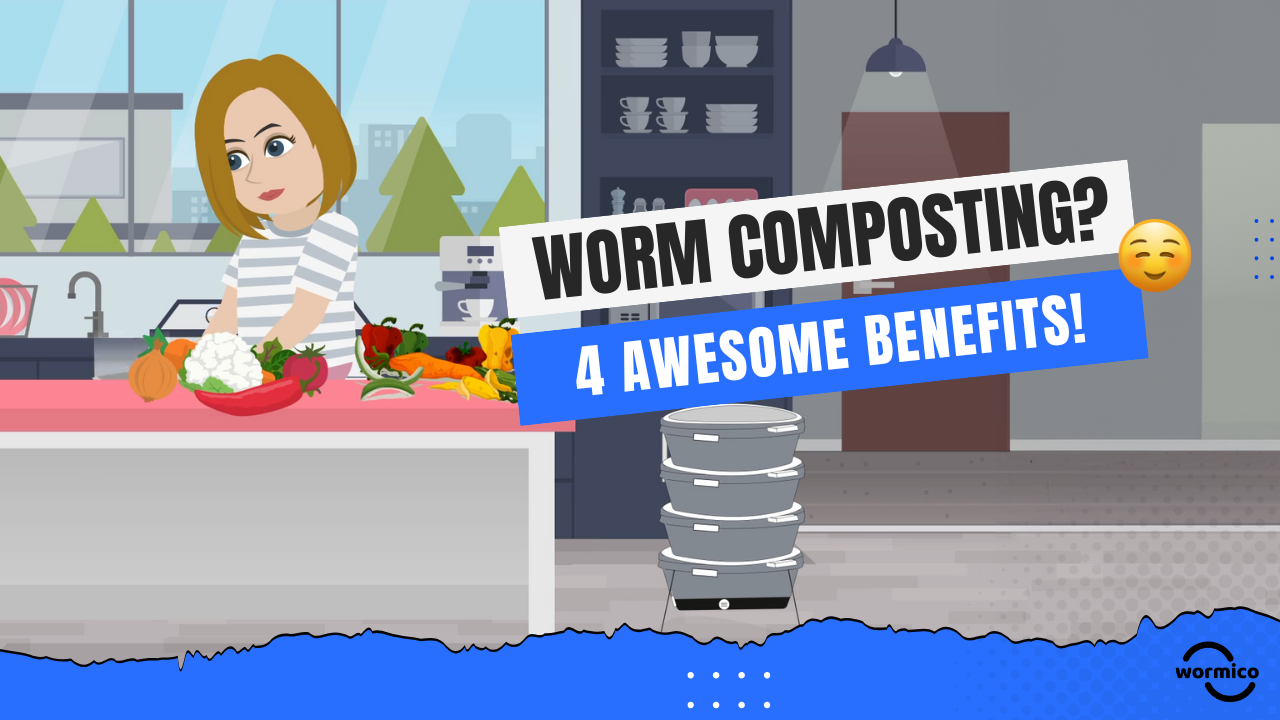
I’ve put together a short animated video that visually walks through the benefits of worm composting.
BTW, if you’re thinking about taking up worm composting as a hobby then a worm tower is a great way to start. Check out my previous blog about the key features of a worm tower if you get a chance!
👉 Watch the full video of the 4 awesome benefits of worm composting
Final Thoughts: Small Habit, Big Impact
Worm composting isn’t just about producing fertiliser — it’s about changing how we view waste. What used to be rubbish becomes a valuable resource. What once felt inconvenient becomes part of a simple daily routine. Whether your goal is healthier plants, reducing household waste, helping the environment, or teaching kids about sustainability, vermicomposting ticks a lot of boxes.